
 ">WeChat

Why are Python reptiles popular?
If you look closely, it is not difficult to see that more people are learning about reptiles, and on the one hand there’s an increasing amount of data available on the Internet, and on the other hand, programming languages like Python provide a growing number of excellent tools that make them simple and easy to handle. Using reptiles we can access vast amounts of valuable data, thereby obtaining information that is not available in sensory understanding.
Here, watch your step.: Whether you’re working for Python or your hobby, remember that project development experience is always at the core, and if you don’t get to the latest python-to-exercise video course in 2020, you can talk to Python. Clothes: seven clothes and seven bars and five (digital harmony) are found under a switch, with many new python programs and talking to old drivers! For example:
Knowing:Climbing out the best answers and filtering out the best content of each topic for you. QUEEN, JIMTON:(c) Taking commodity, comment and sales data to analyse consumption scenarios for various commodities and users. Perpetrators, chainers.• Access to information on the sale and rental of property, analysis of trends in housing prices and analysis of house prices in different regions. @Ambassy: #Jan25 pic.twitter.com/LiU — ⁇ ⁇ ⁇• Graduation of information on various types of jobs, analysis of the demand for talent and salary levels in all sectors. Snowball net:Seize snowballs for high returns to users, analyse and forecast stock markets.
reptiles are the best way to get into Python, not one of them.Python has many applications, such as backstage development, web development, scientific computing, etc., but reptiles are more friendly to beginners, simple principles, few lines of code can achieve basic reptiles, smoother learning processes, and you can feel a greater sense of accomplishment. After mastering basic reptiles, you learn Python data analysis, Web development, or even machine studies.Every knowledge point in Python’s system, long after it was discovered that they still couldn’t climb the data.; some people think it’s important to have a web-based knowledge first, so…Start HTML\CSS, end up in the front end of the hole.…but it’s very easy to get data from mainstream websites in the right way and within a short period of time, but I suggest that you do this.There should be a specific objective at the outset.
Your learning will be more precise and efficient when driven by the goal.All the pre-knowledge you think is necessary can be learned in the course of accomplishing your goals.Here’s a smooth, zero-basic fast-track learning path for you.
Learning from Python and achieving basic reptile processes 2. Understanding the storage of unstructured data 3. Learning scrapy, building engineering reptiles 4. Learning database knowledge to deal with large-scale data storage and extraction 5.
– Oh, my God.
Learn Python pack and achieve basic reptile processes
Most reptiles press.“Send request — Get page — Parsing page — Extracting and storing content”This process is actually a simulation of the way we use browsers to access web-based information.Suggests starting with requests+Xpath,requests connect to the website, return the page, and Xpath is used to decipher the web pages and extract data. If you use Beauitiful Soup, you find that Xpat has a lot of work to do, one layer at a time to check for element code, all are omitted. This is how it’s done.The average static site is not a word. It’s almost ready for bean petals, embarrassing encyclopedia and news.. Of course, if you need to climb a site loaded with an extra step, you can learn the browserYou can automate a web site that analyzes real requests or learns from Selenium, so you can solve the dynamics of knowledge, time networks and owls.– I’m sorry.
Understanding the storage of unstructured data
The data you climb back can be found locally directly in the form of a document, or stored in a database. When starting with a small amount of data, you can go straight to the database.Save data as a file like csv by Python syntax or pandasOf course, you may find the data coming back is not clean, there might be gaps, errors, etc. You need to clean up the data, okay?Learn basic uses of pandas packages for pre-processing dataGet more clean data.
Learn scrapy, build engineering reptiles.
At a time when the powerful scrapy framework is very useful, it is not only a very powerful reptile framework that can easily build requests, but also a strong selfistor who can easily decipher response, yet its most surprising performance is its super-highness to allow for reptile engineering and modularization.
You can build some reptile frames on your own, and you’ve got the idea of a reptile engineer.
– Oh, my God.
Learning database base to respond to large-scale data storage
You can store it in the form of a document when you’re back in small amounts. Once the data is big, that’s not gonna work. So mastering a database is necessary and learning is now more mainstream. MongoDB Just OK.
MongoDB will make it easier for you to store some unstructured data, such as the text of comments, links to pictures, etc.You can also use PyMongo to operate the MongoDB in Python, because it’s really very simple to use database knowledge here.How the data is stored and extractedJust learn when you need it.
Skills to respond to anti-gradation measures on special websites
Of course, there’s some despair in the reptile process, like being blocked by a website, with strange authentication codes, access restrictions for userAgent, dynamic loading, etc. These anti-pastoral techniques are certainly something that needs to be dealt with at an advanced level, conventionally and routinely.Access frequency control, use of proxy IP pool, grab bag, authentication code OCR processing etc.Often, websites tend to favour the former between efficient development and anti-pastoralism, which also provides a space for reptiles.Most of the websites are no longer as hard for you to handle these anti-pastoral techniques.– I’m sorry.
Distributive reptiles, large-scale and combined collection
The problem is not to climb the basic data, but your bottlenecks are focused on the efficiency of climbing big data. At this point, I trust you will naturally come across a very powerful name:Distributive reptilesThe distribution of this thing, it sounds terrible.But it’s using multi-wire methods to get multiple reptiles working at the same time, which requires you to master Scrapy + MongoDB + Redis These three tools.Scrapy, as we said before, is used to make basic page crawling, MongoDB to store reptile data, and Redis to store the web line that you’re going to climb, which is task queue. So something looks scary, but it actually breaks up, but so much so. When you can write a distributed reptile, you can try to build some basic reptile structures and get more automated data. You see, this learning path down here, you can become an old driver, and you can be very smooth.Try not to eat systematically, find a real project. Just start with simple things like bean petals and pigs.Because the reptile technology requires neither your systematic mastery of a language, nor the depth of database technology.The efficient position is to learn from the actual project of these scattered knowledge points, and you can guarantee that each learning is the part most needed.
Of course, the only problem is that in a particular case, finding the specific part of learning resources needed, screening and screening is a big problem for many beginners. But don’t worry, we’ve prepared a very systematic reptile course, except to provide you with a clear path to learning, we have chosen it.The most practical learning resourcesandLarge mainstream reptile case bankA short period of study, you can master the reptile technique and get the data that you want. After a short period of learning, many students have made progress from 0 to 1, able to write their own reptiles and climb large numbers. Below are some of them.Operations cluster sharing: Climbing LOL Heroes’ Skin High Clear Pictures @ Silent Panda crawled on the fire-cracking wallpaper, Moba Game “Home League”, Hand-Swam The Glory of the Kings, The Sun and the FPS Game “The Wild End to Life” with the most difficult wallpaper in the “hero Alliance” show here showing how it was to climb all the hero wallpapers from the “Hero League.” First look at the effects of this final climbing, every hero’s wallpaper has been taken down:

One hundred and thirty-nine Heroes Wallpaper folders, 12 wallpapers from “The Dark Woman Annie”:


So, the Red Hood, Annie, the Great High-Level Plankton 1. The reptile flow chart, which has been developed to provide some insight into the objects I’m going to climb, as well as ideas about how to climb.

2. Based on the reptile flow chart, I designed the following code frame:

This code frame is very easy to read, mainly the Run() function, the Run() function does a set of jobs: create LOL folders – get the information entered on keyboards – climb all hero wallpapers if it’s “All” or climb individual hero wallpaper.

Once we get the information from every hero, we can start to crawl with their wallpaper.


When running the code, care is taken to keep the network open, and if the net is too slow it may fail. It takes about three or four minutes to climb under a 3 mega-wire web speed to get all the high-clean wallpapers (about 1,000 maps) of all 139 heroes. The same thing can happen in other games such as King’s Glory, the Sunnian, the Jedi for Life, which, according to my practice, is the most difficult to climb by Heroes Alliance, so I understand this process, and then I write the code to climb other games easily.

The group uses anti-crawling mechanisms to simulate browsers for crawling. After several attempts, only Cookie and User-Agent have been tested.

Climbing to the first set of data, climbing to the first set of data, then trying to flip pages. Turning to the page was very simple, and then crawling over business calls, business hours, etc.

Pack and write a function

It got to the right information, but it didn’t last long. It was 403 when it got halfway through.

Because it’s sealed, we can only visit without a trace? Look at this. We decided to use multiple cookies and then random calls to avoid being blocked. And 17 cookies were finally used, tested for high-speed climbing.

This climb is over here, but the crawling data can be analysed in a number of ways, such as out-sale situations in different parts of the world, distribution of businesses, etc. The reptiles are all five-star books in various categories on the Internet @ZhuNew, and the web site selected for climbing is used as a web, when there is more book data, especially five-star books, which contain some of the most popular library information in every field, and have some value in finding valuable books, analysing sales of good books.

I want to climb the data from five-star book information (book name, number of comments, author, publisher, time of publication, five-star rating, price, e-book prices, etc.) under various classifications (novels, elementary and secondary school teaching, literature, success/inspiration …). To capture library information under each category, first, see if links change when clicking on individual categories.

When the back-up of the web is not so strict, I don’t even have any information on the Headers that I can climb to get what I want. But finally in the complete code, we add the headers for safety purposes. Then we crawl through each category separately, using “novels” as an example, and turn pages, which are particularly simple, making a few comparisons:

It’s very simple to turn back pages, but there’s a little bit of the pit where you have to climb back in code and flip over it, and you need to build them out. An analysis of the links that come back shows just four numbers different. So I take these data out and pass them on into the connection so that we can create common connections.

The next thing you can do is get information from different pages, and there’s no walk-by load, so you can just click on xpath. And of course there are a few small places in the middle that each book contains different information, so it doesn’t have to be accessible when using xpath. So use the try except statement.

The only problem is that the links captured continue to flip pages and parts of some of these books are missing. The reptile job information @Nansheng was intended for a “data analyst” position, so he wanted to know what the pay, requirements, and main distribution points in the cities where I live, with which the Internet is an authoritative recruitment platform for the Internet industry, so there’s good representation on the climb-through “data analysts” jobs.


When learning to turn over the page, the quotes were added to JSONDecodeError’s error, and I was taken too long to share it with you. After stepping on two pits, I started doing after school work, but it wasn’t easy for a new hand. My idea began by looking for connections, but there was no connection in the collected data, so I clicked into the details pages, see if there was any pattern? And then I tried to click on the detailed pages many times to find that the number of the pages matched one of the data collected.

Some details page. Find a breakout and move on:

DOC

Many attempts (or some time) have been made: reQuest url is the same as a web site, and if you find that breakout point, data are in DOC format, reQuest method: get back to familiar battlefields.

Further information web page

xpath method to obtain data Partial data:

One attempt to optimize the code, which is mainly a learning and creative process (the climbing of details page is my masterpiece).
– Efficient learning paths-

It’s very unreasonable to come up with theories, grammar, programming language.Learning from specific knowledge points through practical operations, starting directly with specific cases. We’ve planned a systematic learning path for you to stop facing fragmented knowledge points, and say something specific about how we can solve the web page by replacing Beauitiful Soup with lxml+Xpath, thereby reducing your unnecessary checking of web elements.We’ll give you the simplest way.These seem to be the details, but they may have been the pits that many people would have stepped on.
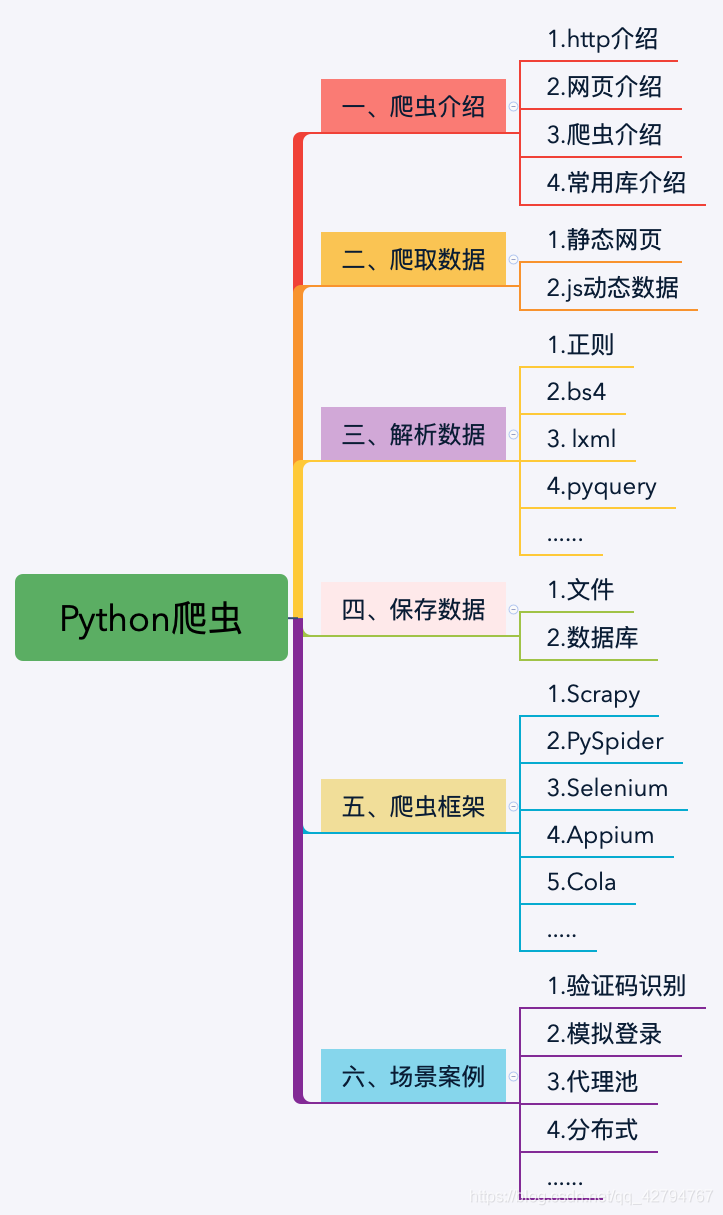
Outline of Python reptiles: Introduction + Progress
Chapter I: Python Communion of reptiles
What’s a reptile?
Web site composition and page-turning mechanisms Web source structure and web request process Application of reptiles and rationale
First-time Python reptiles
Python reptile environment set up to create the first reptile: crawling 100 degrees of front page.
3 – The use of Requests to climb the bean petals short evaluation
The installation and basic use of Requests, using Requests to climb short assessments of bean petals, must know the reptile protocol.
4. Use XPath to analyze short assessments of bean petals
Installation and introduction of Xpat: Browser Copying & Handwritten Fields: Parsing short assessments of bean petals with Xpath
5. Use pandas to save short assessments of bean petals
Basic uses of pandas to introduce pandas file preservation, data processing: use pandas to save short assessments of bean petals
6. Browser grab and headers settings (case I: crawling knowledge)
The general idea of reptiles: capture, decompose, store browser grab to get Ajax loaded data set headers over anti-pastoral limits Actual action: crawling from user data
7. MongoDB for Data Repository (Case II: Graving hooks)
The installation and use of MongoDB and RoboMongo Set the waiting time and modify the header Action: Climbing for jobs Data Stored in MongoDB Complementing Fields: Climbing for Microblogging Move-end Data
8. Selenium Climb dynamic web page (case III: Climbing for treasures)
Dynamic Web Climber Selenium set-up and use Analysis of Treasures Page Dynamic Information Operational: Crawling Treasures in Selenium
Chapter 2: The Scrapy Framework for Python Carpets
1. reptile engineering and the Scrapy framework first glance
html, css, js, database, http protocol, back-to-back operation, reptile step workflow Scrapy components: engine, scheduler, download medium, project conduit etc. Common reptile tools: various databases, catch kits etc.
2. Installation and basic use of Scrapy
Start the first Scrapy project.
3. Use of the Scrapy Selector
Common Selector: css, xpath,re,pquerycs Usage Method xpat Usage Method rePyquery
Project Pipeline 4, Scrapy
Item Pipeline’s introduction and role as its main function Examples: Writing data into files Field examples: Filtering data in pipes
5-Scrapy’s middle
Download the middle and the mid-spiders Download the three functions of the mid-point System Default
6 and Scrapy’s Request and Response.
Request object basic and advanced parameters Request object method Response object parameter and methodology for a comprehensive use of the Resonse object approach
Chapter III: Python reptile step-up
1 Google Viewer Pack Analysis for Network Progress
http request for detailed analysis of web panel structure, key-word methods to filter requests Copy, save and remove network information View resource sponsors and dependencies
2. Data entry and database
Data to weight. Data to database MongoDB.
Chapter 4: Distributional reptiles and hands-on training projects
1. Large-scale, combined collection – preparation of distributed reptiles
Scrapy-Redis uses Scrapy-Scrapy deployment details
Project on hands-on training (i) – Secondroom monitoring in the city
3 Practical Training Project (ii) — Where to Simulate Landing
Training Project (iii) — Kyoto Commodity Data Capture
– There’s study materials in every class.
You may have collected G-based learning resources, but you never opened them after saving them?We’ve found the most useful part for you and described it in its simplest form.In order to help you learn, you can devote more time to practice and practice. Given the variety of issues, we have prepared after-school materials in each section with four sections: 1. Course focus notes detailing focus knowledge to help you understand and follow up quickly; 2. Default that you are white, complementing all basic knowledge, even software installation and operations; 3. Reference code learning from within and outside the curriculum to make it easier for you to cope with mainstream web reptiles; 4. Overextensional knowledge points and problem solving ideas to enable you to address some of the specific problems encountered in practice.


Some part of the post-school information
– There’s a lot of cases, covering mainstream websites.
The most common cases of web reptiles are currently available: bean petals, milligrades, knowledgeable, treasure-hunting, Kyoto, Weibo…Each case is analysed in the course video, and the teacher takes you through every step of your operation.And we’ll add examples like piglets, chainers, 58 co-cities, cyber cloud music, and micro-trust friends to provide ideas and codes. After many imitations and exercises, you can easily write your reptile code and easily climb the data from these mainstream sites.

– Skills development: anti-pastoralism and data storage, processing –
It’s not enough to understand basic reptiles, so we’ll use practical examples to show you some of the anti-pastoral measures on websites and to circumvent restrictions with specific techniques.Like a walk-in, IP restrictions, headers limits, authentication codes, etc.And these more common anti-pastoral techniques, you can avoid very well — engineering reptiles and distributed reptile technologies that give you the possibility of obtaining large-scale data.In addition to the reptile content, you’ll know basic knowledge of the database (Mongodb) and pandas to store the reptile data while managing and cleaning it.And you can get cleaner data for subsequent analysis and processing.

Crawl rental information with Scrapy

Climbing recruitment data and using MongoDB storage, remember that whether you work for Python or your hobby, project development experience will always be at the core. If you do not have a new python-to-exercise video course in 2020, then you can go to a minor Python exchange. Clothes: seven clothes and seven bars and five (digital music) are available under conversion. Many of these new python programs are available, and you can talk with old drivers! The text and pictures come from the Internet and add their own ideas, only for study, communication, no commercial use, copyright is owned by the original author, and contact us as soon as possible to handle them.
未经允许不得转载:萌萌Apprentissage » Python reptiles: How to learn how to climb large-scale data in a month?


 linux One Chinese script
 Google shell enable enhanced mode 4 nuclear 16G RAM
 Python batches to extract mainstream search engine pictures
 Python's word crawling across 100 degrees.
 PythonTaiichi Taipei Artificial Intelligence Tensoflow Graphic Processing
 Selenium with Tor Browser using Python

