
 ">WeChat
Autoptimize is a free WordPress Optimization Plugin. Besides HTML, CSS and JavaScript Optimisation, Autoptimize also includes optimization features for other aspects of the modern WordPress site.Web Page Load velocity analysis
https://developers.google.com/speed/pagespeed/insights/?url=https%3A%2F%2Ful00.com%2F


Before we go into the best Autoptimize setup, let us quickly recall three reasons why Autoptimize is an excellent optimisation plugin.
- A free version of Autoptimize has a complete set of features to optimize WordPress.
- Autoptimize is strictly an optimised plugin that does not execute any HTML page caches. This means it is compatible with all Web hosts, even including Web hosts with custom page cache configuration (e.g. Kinsta).
- Autoptimize has over 1 million active installations in WordPress and is constantly updated to provide new functionality and bug fixes.
#js-mykinsta-video ⁇ Background picture:urlhttps://kinsta.com/wp-content/themes/kinsta/images/[email protected]);
The auto-optimal HTML, CSS and JavaScript are the basis for Autoptimize. Like other optimising plugins, it may be a difficult task to understand the wide range of Autoptimize functions and settings. To simplify operations, we aggregate the best “automated” settings to improve your website’s performance.
JavaScript Options
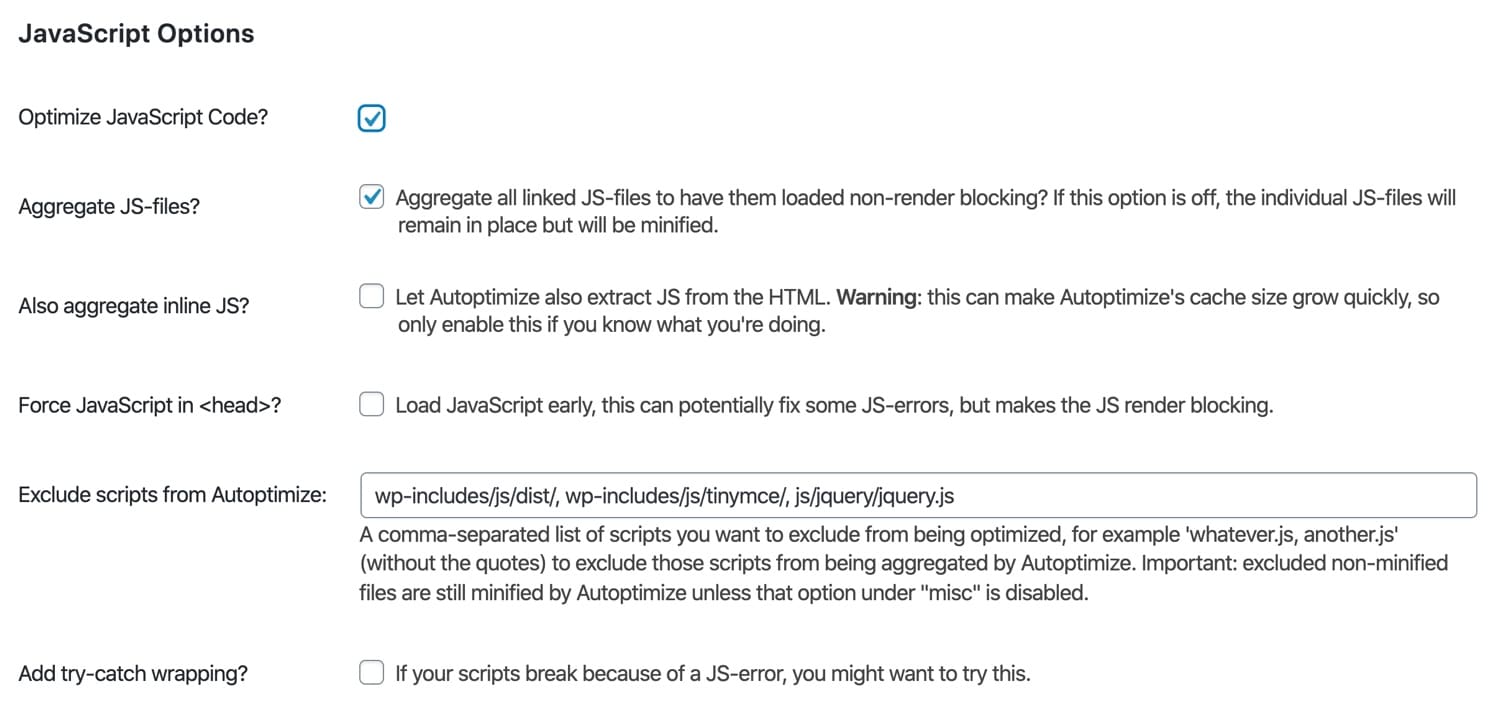
JavaScript optimization in Autoptimize.
Optimizing JavaScript Codes We suggest that this option be enabled. Enable the “Auto-optimization” to minimize your JavaScript file after it is enabled. The “Consolidation of JS files” option for JS files will consolidate all your JavaScript files into one document. In the past, combining JS and CSS documents was a key step in optimizing WordPress. In Kinsta, we used modern HTTTP/ 2 servers that supported simultaneous downloading and multi-routing. This means that merged files are no longer as important as before, because HTTP / 2 allows multiple downloads simultaneously. Nevertheless, bringing together CSS and JS files would result in some types of WordPress sites increasing speed, so we recommend testing your page speed with permission and prohibition. In most cases, we do not recommend forcibly loading JavaScript files into the HTML element of your website. Forced early loading of JS may result in rendering deterrent elements, which could reduce the speed of your page. If you have a JavaScript file that needs to be loaded in the elements, we suggest excluding these scripts from “Auto-optimization”. Exclude scripts from automatic optimization. This option allows you to exclude specific directories and JavaScript files from aggregation. By default, Autoptize excludes the following scripts.
- wp-includes / js / dist /
- wp-includes / js / tinymce /
- js / jquery / jquery.js
Note that by default, adding the excluded script will only affect aggregation. Unless a “minimised exclusion CSS and JS file” under “Other options” is not selected, the excluded JavaScript files will be reduced. Adding an attempt to capture packaging Enables the “try-catch package” option would wrap JavaScript code in the try-catch block. This option is useful for debugging problems caused by JS’ shrinkage and amalgamation. If your website works only if you “add the try-catch package”, we suggest that you visit your JavaScript file with developers to find problematic documents because too much use of the try-chatch block reduces JS performance. Autoptize: You do not know what you need free WordPress optimized plugins… but this will allow your web site rapid flash guide to explain exactly why you need it?
CSS Options
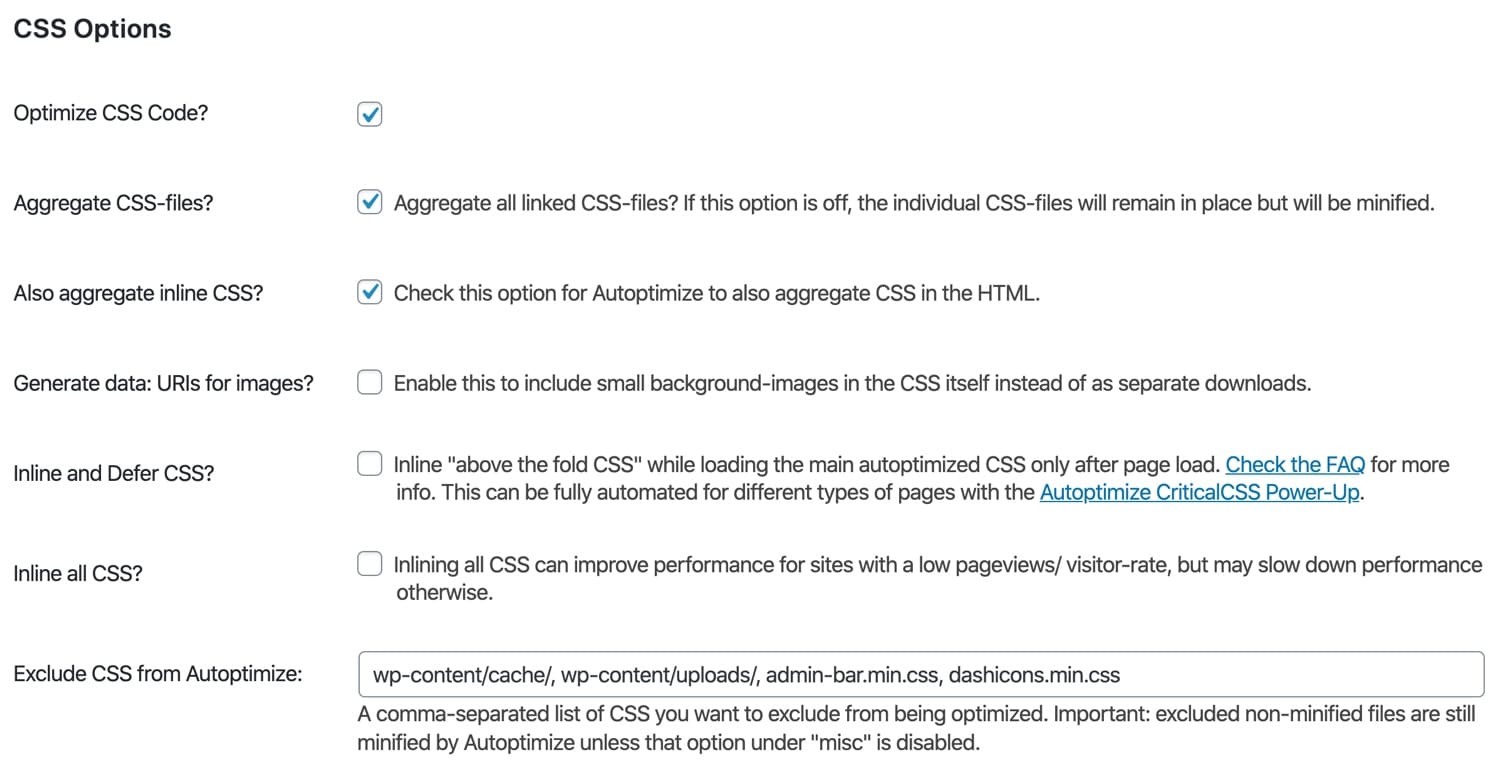
Auto-optimizing CSS optimization.
Optimizing the CSS code, we suggest that this option be enabled. With the enabler of “optimising JavaScript Code”, the Auto-Optimation will minimize your JavaScript file. The “polysing CSS file” option for CSS files will consolidate all CSS files into one document. As mentioned earlier, this feature may not benefit the site supporting HTTP/ 2. We recommend that you perform an A/B test on your website to determine whether it has a positive impact on the speed of the web page. Also, the Inline CSS is expected to move the CSS connection to Autoptimize’s CSS file. While moving CSS embedded CSS documents to a browser cached CSS file can reduce the size of your CSS file, in most cases it is recommended that this option should not be used. Upon using this option, the URI will encode small background images and embed them into the CSS file to assess the effect of the page speed. Although moving to the image encoding file would reduce the size of the page in a Web viewer cache, we will add 30 per cent to the 20-brese. Add over 20,000 others who receive weekly news about WordPress’s internal skills!
The next issue of the Kinsta newsletter will be received within a week.
Subscription to Kinsta News Newsletter Subscription I agree with the terms and conditions and privacy policy
Intraconnection and delay CSS key CSSs can significantly increase the speed of some sites. The idea here is to use the internal interlinking style required for “cut” elements. In fact, CSSs are usually targeted at structural elements, global font series and size, and navigational styles.
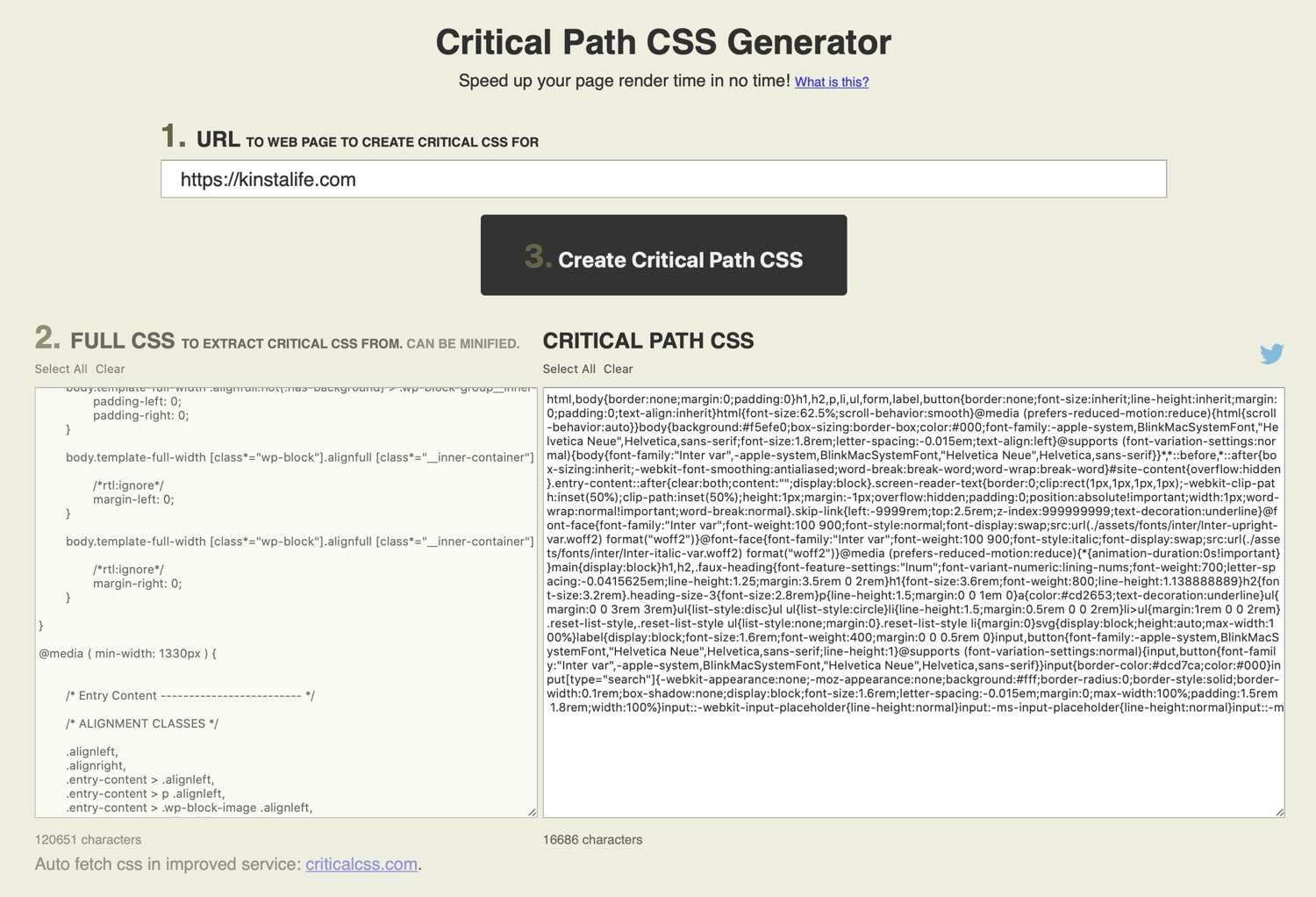
Generate key CSS.
Generates key CSS, copy and paste it to the Auto-optimization settings.
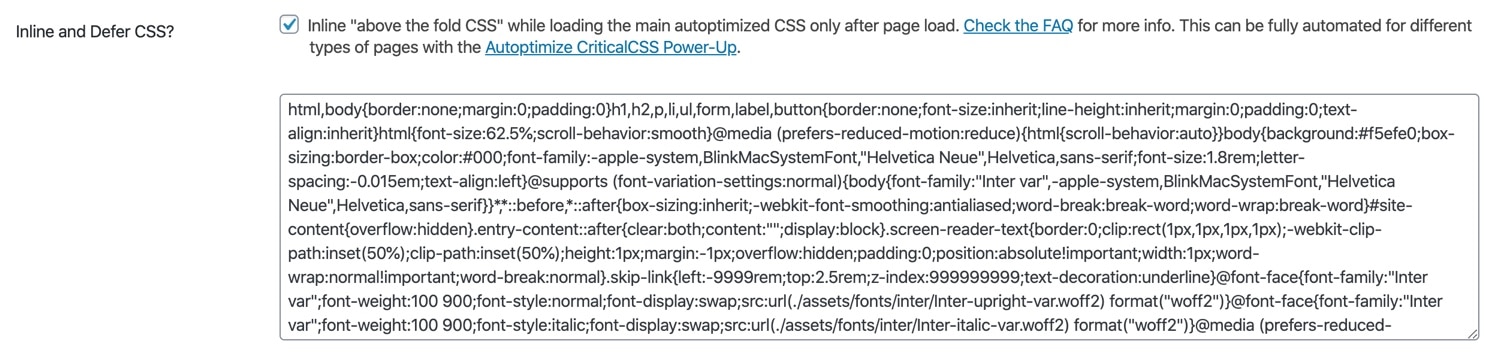
Interconnect and delay CSS in Autoptimize.
The next step is to test the front-end experience of your website. If you find some unusual changes in unstyled content (FOUC), it may be necessary to identify those elements that are not styled and add the corresponding styles to “automodify” for interlinking. Autoptimize provides an “additional” feature, which can automatically generate key CSS for WordPress pages. In addition, all CSS connections make it impossible for Web browsers to store critical CSSs because they use external API to create CSS. Thus, the initial key CSS generation depends on the responsiveness of external servers. In most cases, these methods do not require any external API call, but are a cleaner solution.
- wp-content / cache /
- wp-content / uploads /
- admin-bar.min.css
- dashicons.min.css
HTML Options
Autoptimize ‘ s HTML optimization helps to reduce page size by eliminating gaps.
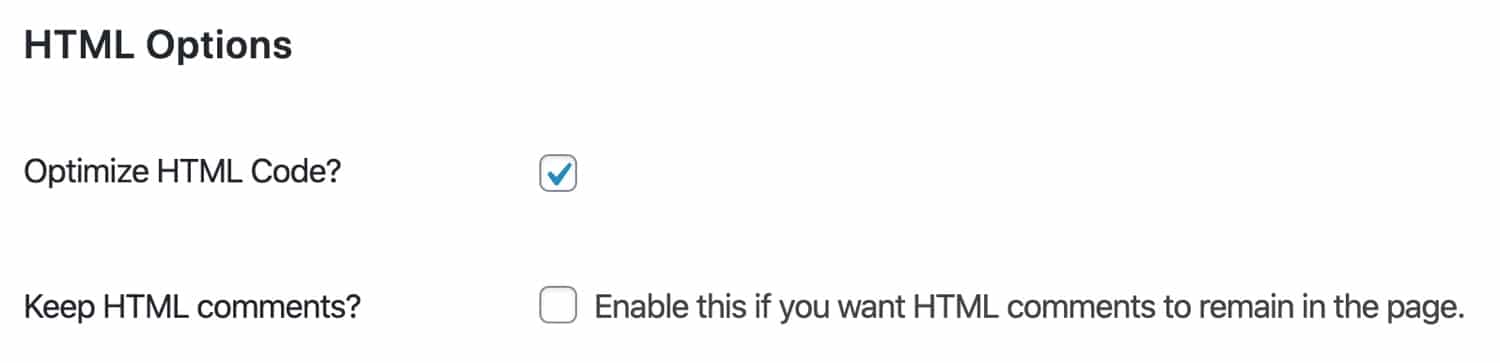
HTML optimization in Autoptimize.
Optimizing HTML Codes We suggest that the HTML code function be enabled because it can reduce page size by deleting unnecessary spaces in HTML. Although this feature is compatible with most sites, removing spaces may cause problems at some stations. Therefore, we propose to test HTML codes fully before they are optimized in a production environment.
CDN Options
If you use a CDN like KinstaCDN to speed up static assets, add the CDN URL to ” Auto-optimization ” . If you use an agent service with a CDN function (e.g. Cloudflare), no configuration is required in Autoptimize ‘ s CDN option.

Configures the CDN settings in auto-optimization.
Can not open message
Autoptimize’s Cache Info shows important information, such as the location and permission of a cache folder, and the total size of the cache style and script. If you see No next to ” Can we write? ” , you need to fix folder privileges with your host.
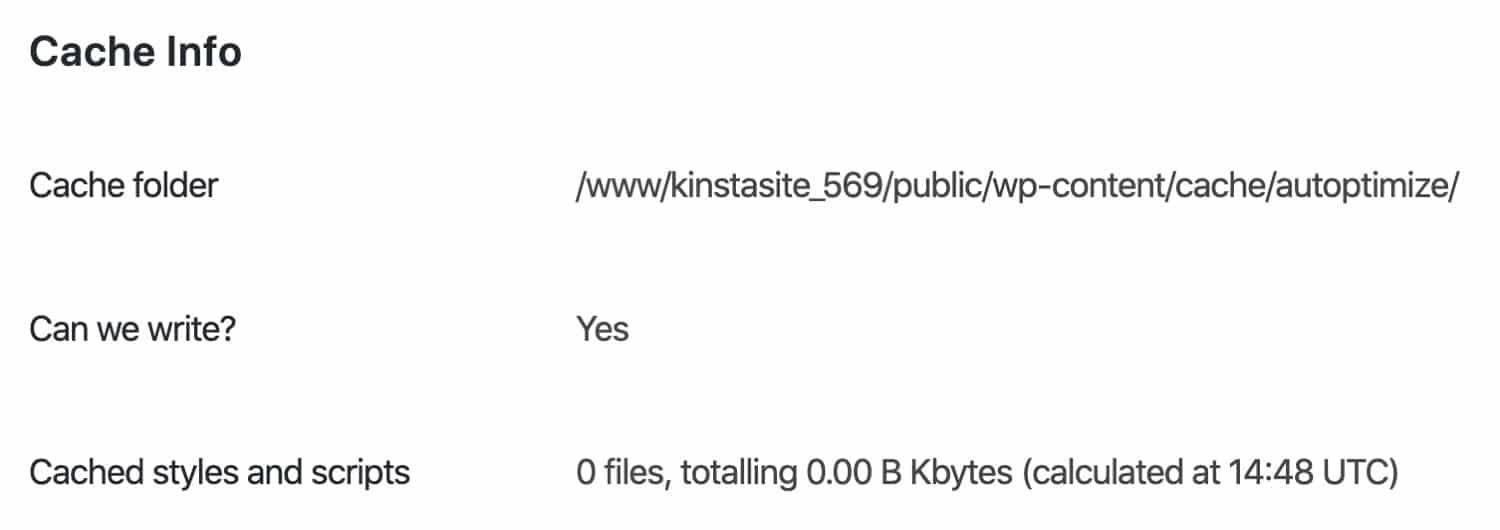
Automatically optimizes the cache information.
Miscellaneous Options
Automatically optimizes some other optimisation settings. If you have problems loading the optimized CSS and JS files onto a website, you may need to reconfigure some of the following settings.
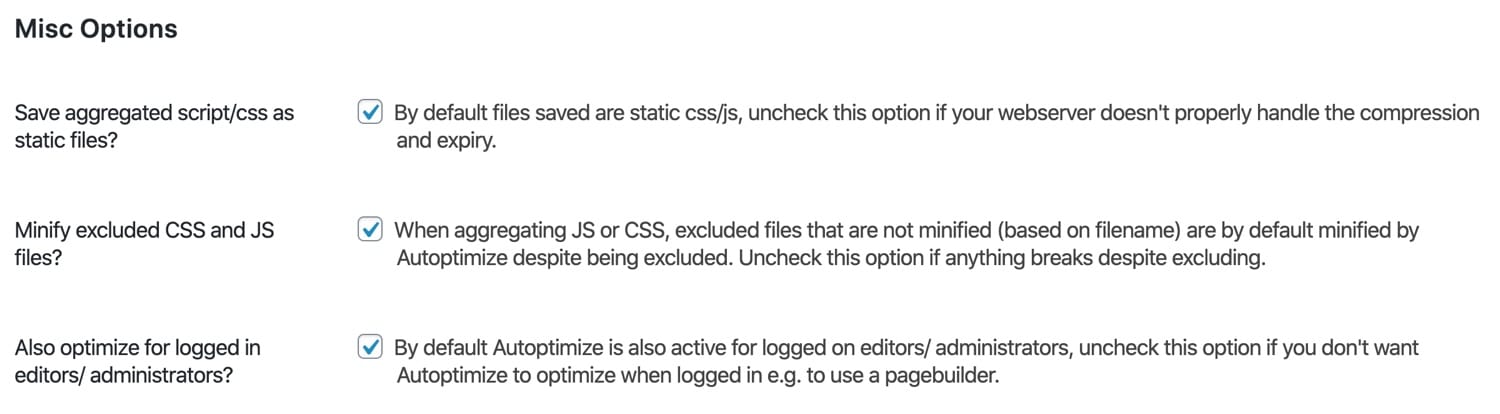
Other optimizations in Autoptimize.
Saves the merged script/CSS as a static file, and we suggest that this option be enabled to save the polymer file as a local static file. If your server is not configured to process file compression and expiry, it may need to be disabled. We reduce the excluded CSS and JS files. Instead, we suggest using the fully functional plugins of ShortPixel or Imagify directly. Using a complete plugin you can exercise more sophisticated control over optimisation settings, including rewrite images to use labels that are necessary for WEBP support on Kinster.

Use auto-optimization to delay loading of images.
Autoptimize also includes delayed loading of images. We suggest that this feature be enabled to increase the speed of pages with a large number of image pages. When it is enabled, “Autooptimization” allows you to exclude certain image classes and filenames from the delay loading. Excludes images such as logos, social icons and other important elements of images which should not be delayed. If you are looking for a solution that better controls delays in loading, look at the guide on late loading of images and videos in WordPress. Additional optimization in automatic optimisation.
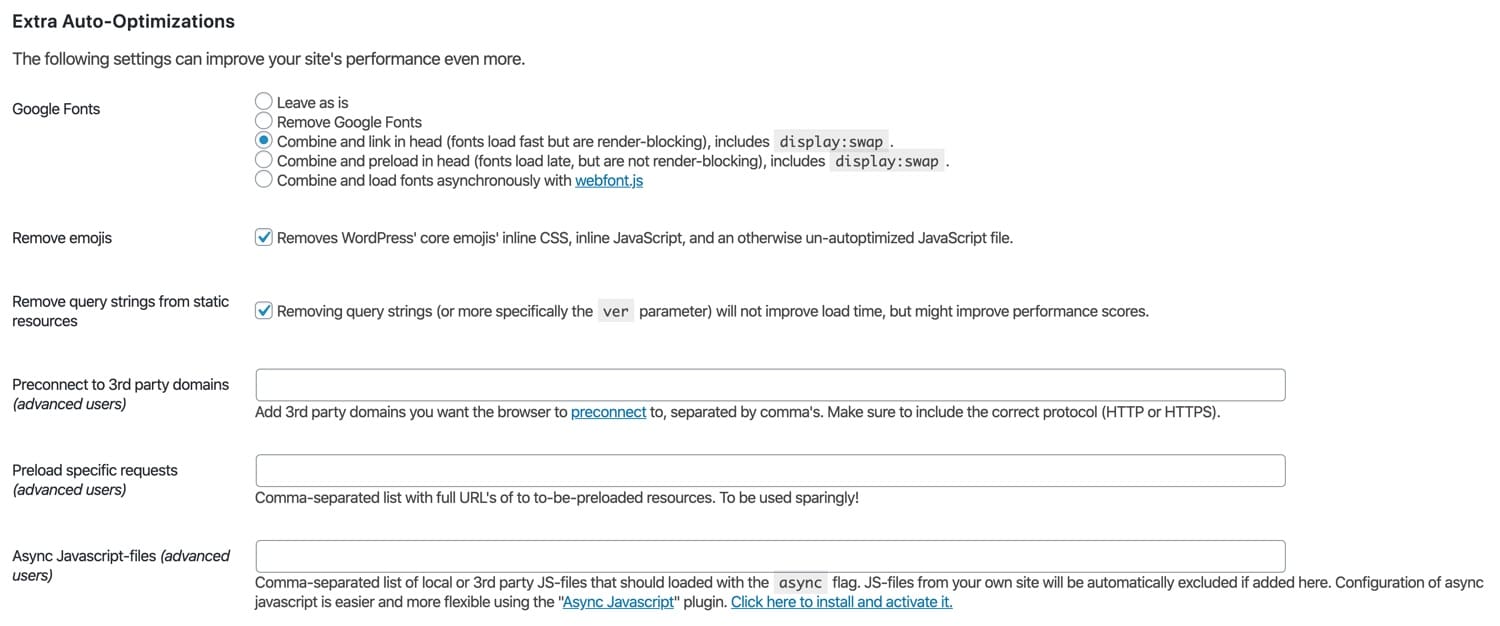
Extra optimization in Autoptimize.
The Google Font Auto-optimization feature has several different options for optimizing Google fonts. The best choice depends on how your website uses Google fonts.
- As usual.
- Delete the Google font.
- Merges and links to the head.
- Merge and preload on the head.
- Combining and loading fonts with webfont.js.
If you want to keep Google fonts on your web site, it is recommended that you test the last three options for finding the most suitable option for your website. Delete emoticons This “auto-optimization” option will remove CSS and JavaScript associated with WordPress core emoticon symbols. We suggest that this option be enabled because it helps to reduce page sizes. In addition, most mainstream operating systems can have a face stack attached to them. Of course, there are other ways to ban emoticons on WordPress. If you want to remove search strings from static resources (e.g.? ver=), this option may be enabled. The deletion of query string does not affect loading time but helps you improve the web site ‘s font stacking with emotics in GTTrix, Google Page and other sex testing services. The preconnect command allows your browser to connect to the specified domain in order to process DNS search and SSL handshake consultations before sending a complete HTTP request. For example, if you have a site fromhttps://site.kinsta.cdn.com/logo.png提供的徽标图像,则可以指示Autoptimize在元素之前添加预连接指令以处理元素中的初始DNS和SSL连接。 HTTP requests are made in HTML elements. You can find important external areas to be pre-connected using the browser’s developer tool or checker. On the following example page, you can request an external request for the following fields.
- https://cdn.brianli.com
- https://www.google-analytics.com
- https://www.googletagmanager.com
These three fields can be added to the Autoptimize pre-connected list.
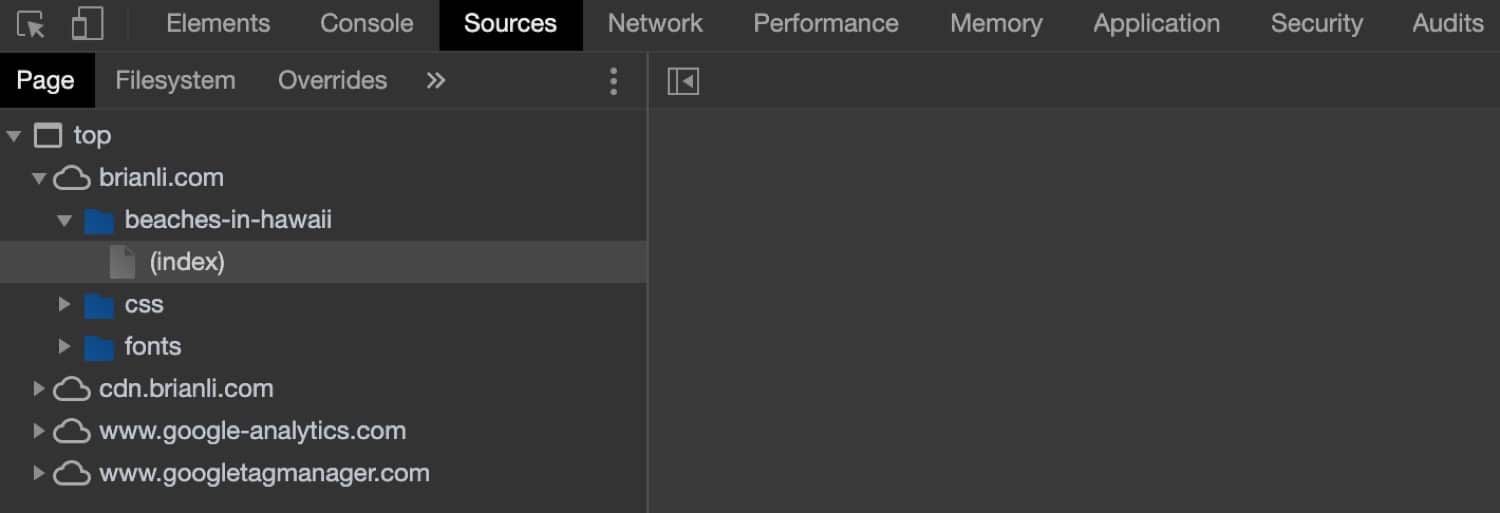
Using the Developer tool to locate external assets.
For reasons of performance, we suggest adding not more than six domains to the list of pre-connections for Autoptimize, since assigning pre-connection instructions to too many areas could result in reduced performance. Loading specific requests Preloading instructions instructs your Web browser to download assets as soon as possible. This directive is useful for early downloading assets during the page loading process. In practice, by requesting custom font loading on a page CSS, preloading them can normally be used to speed up loading of defined fonts. We recommend that you consult developers about which assets (if any) are to be preloaded with some external JavaScript files on your WordPress website through an off-the-HTML sign. While it may slow your website by adding too much asset to the performance order, as many other adjustments associated with performance, it is likely that JS will be able to increase the speed of your web site. Autoptimize has basic features like HTML and CSS optimization, as well as more advanced functions such as CDN integration, and can assign pre-connection and preloading instructions that provide everything necessary to optimize the front end of WordPress. If you want to know more about WordPres optimization and how to optimize the backend of the site, look at our overall WordPres performance guide. If you like this article, you will like the WordPress hosting platform in Kinsta. Speed up your website and get 24/7 support from our experienced WordPress team. We focus on automatic expansion, sexuality and security based on Google Cloud’s infrastructure structure. Let us show you Kinster’s different plans!
未经允许不得转载:萌萌Apprentissage » How to set auto-optimize auto-autoptimize plugins for your WordPress site

 WordPress Summary of Moving Methods: Migration of Hosts and Replacement of Domain Names
 Fix the Alt properties of Wordpress Google SEO search engine to optimize missing images
 WordPress Configure Memcached Cache Course (no code required)
 Use the tower panel to accelerate the optimization of the course on Wordpress 4 paces
 Wordpress used redis or memcached to make site caches optimized.
 Wordpress website moveovers to change domain name solutions
 Method to change the default login page name for Wordpress wp-login
 WordPress User Registration Increase Authentication Bans Machine Registration

